


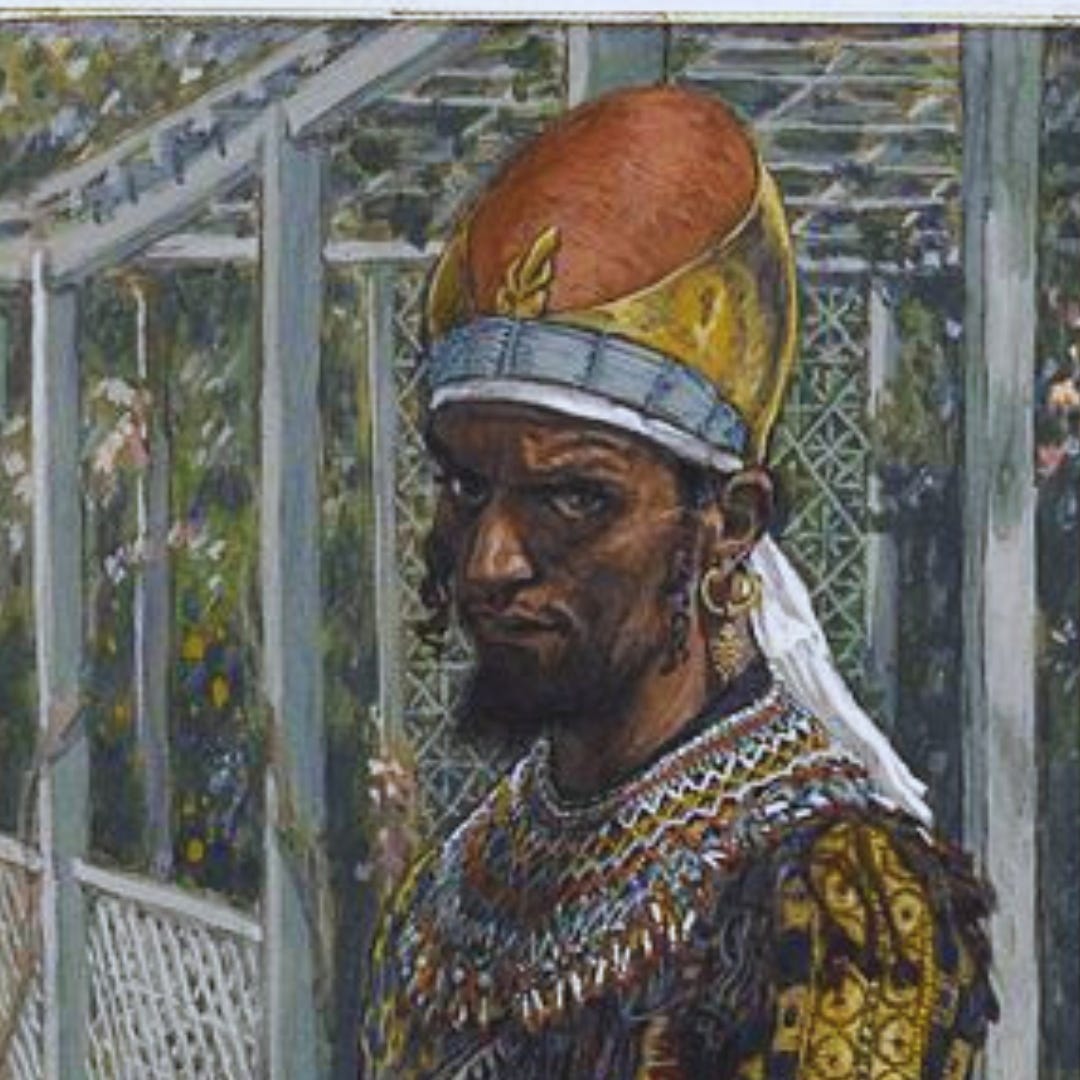
Herod the Great is absolute scum. I think we can all agree on that.
No matter how you read the gospel accounts of Jesus’s birth, there’s no way to rationally pretend Herod is just some misunderstood anti-hero or even a good person.
Murdering boys 2 and under is icing on the cake. History proves Herod was much worse than the gospels depict him.
A miserable, self-centered, power-obsessed fake who wanted absolute control over the entire makeshift “kingdom” of Israel he’d inherited as a hand-me-down from the Maccabees.
To maintain sole control, he became so paranoid of threats to his rule that he resorted to killing his own family. By the end of his reign, the familial body count was:
1 wife
3 sons
1 father-in-law
1 mother-in-law
The last of his sons was the crown prince, set to inherit his throne. Executed days before Herod’s passing.
The Christmas story would be much more palatable without him, for sure. But Matthew doesn’t bring Herod up because of his twisted history, paranoid psychosis, and penchant for the sword.
Herod is central to the story of Jesus because he’s the new Pharaoh. And Jesus is the new Moses.
400 Years a Slave
Let’s backtrack for a moment. Get the picture of Exodus clear in our minds.
God predicted to Abraham that members of his offspring would reside in a foreign land for 400 years, then God would bring them out and make them his own. And it happened after Joseph saved Egypt from 7 years of famine.
Jacob (Israel) and the rest of his 12 sons came from Canaan and made Egypt home. They were treated like royalty while Joseph lived, and for a long time after, since Pharaohs either knew Joseph or knew of him and what he did for all the land.
Until the father-son duo Thutmose III and Amenhotep II took the throne.
It was common in Egypt for families to rule together in Egypt. “Pharaoh” was a title that represented both the king and the whole household of the royal family. Which is why they are called dynasties by historians, like Herod’s own dynasty.
Thutmose and Amenhotep were of the 18th Dynasty. Neither knew Joseph, and both despised the Israelites.
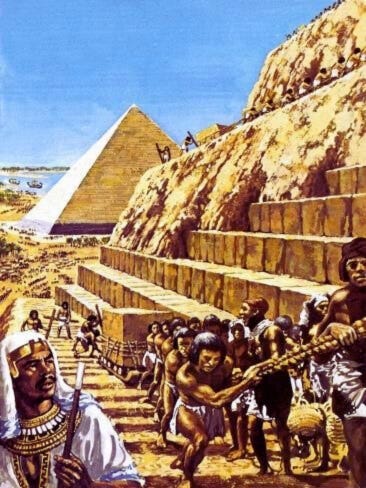
Thutmose III was a pompous, self-obsessed ruler who basked in worship from his constituents. He wielded an iron fist, enslaving all the Jews and other foreigners in Egypt to work on endless construction projects in the grueling desert heat. Without end and without pay.
To make statues and temples to the gods displaying Thutmose’s absolute hold on not just Egypt, but the cosmos. And remind all foreigners and Egyptians that all power and control belonged to him (sound familiar?).
Many Israelites died from beatings, the elements, falls from great heights, or in the mouths of wild beasts. And the torture didn’t end with Thutmose. Amenhotep carried on his father’s legacy in due fashion, following the same playbook.
Matthew saw in Herod this history unfolding once more around Jesus.
Herod is the house of Pharaoh reimagined. And the kingdom of Egypt would once again be brought to its knees.
Enjoying this article?
Upgrade to a paid subscription to get theses awesome benefits:
Exclusive lessons every Tuesday explaining why you can believe in God with conviction and/or how to live for him with courage, OR deeper dives into Scripture, theology, or apologetics.
An exclusive subscriber chat to get real-time feedback from Courageous Chris and other like-minded Christians about doubts, evidence for God, and much more.
A lifetime 30% discount to our growing Gumroad store with how-to guides and courses on how to argue and live your Christian faith in a secular world.
The humble feeling of knowing you are supporting a growing ministry with a mission to spread the good news of Christ to a dying generation.
Makings of a “God”
Herod was installed as “king” over Judea by the Romans in exchange for their assistance defeating Antigonus, the last remaining member of the exiled Hasmonean Dynasty. And once Rome came, Rome never left.
The Jews resented Herod for that and also
because of his ruthless killings (they were often targets too)
because he frequently took the spotlight away from God.
because he wasn’t even a Jew
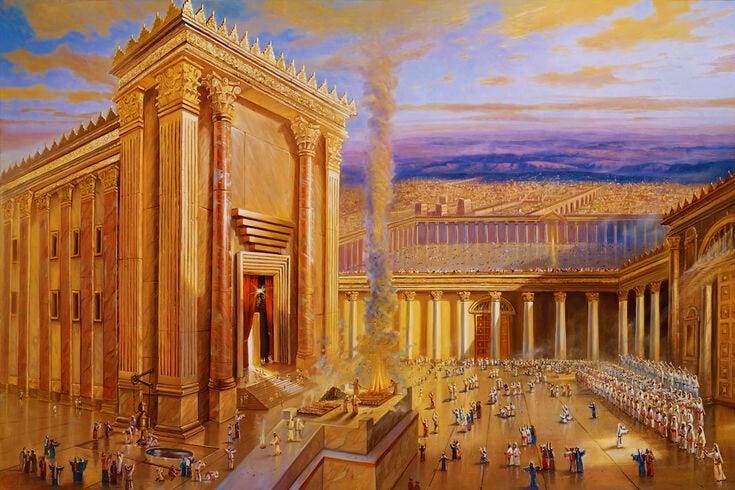
To make matters worse, Herod also enlisted and enslaved many Jews to vastly improve the rebuilt Temple Mount (destroyed by Babylon) and his own palace into a grandiose display. A tourist attraction for the surrounding nations. Rivaling Solomon’s own Jerusalem nearly a millennium before.
His palace was located on the old site of Jericho, where Joshua had led the Israelites into their first victory over the Canaanites and claimed the land promised by God.
Herod fancied himself greater than God and God’s elected leaders in Israel’s history. His unyielding message: “The greatest era of Israel has arrived. Bow to your savior.”
The irony of the situation wasn’t lost on a single Jew. Once again, they found themselves under the thumb of a foreign ruler who claimed divine kingship, despised them, and stole from them their property, dignity, and lives. And attempted to steal the house of God Most High.
But God had other plans.
Ark of the New Covenant
You’ve surely wondered why Jesus was born in a manger. Well, buckle your seatbelt. This gets wild.
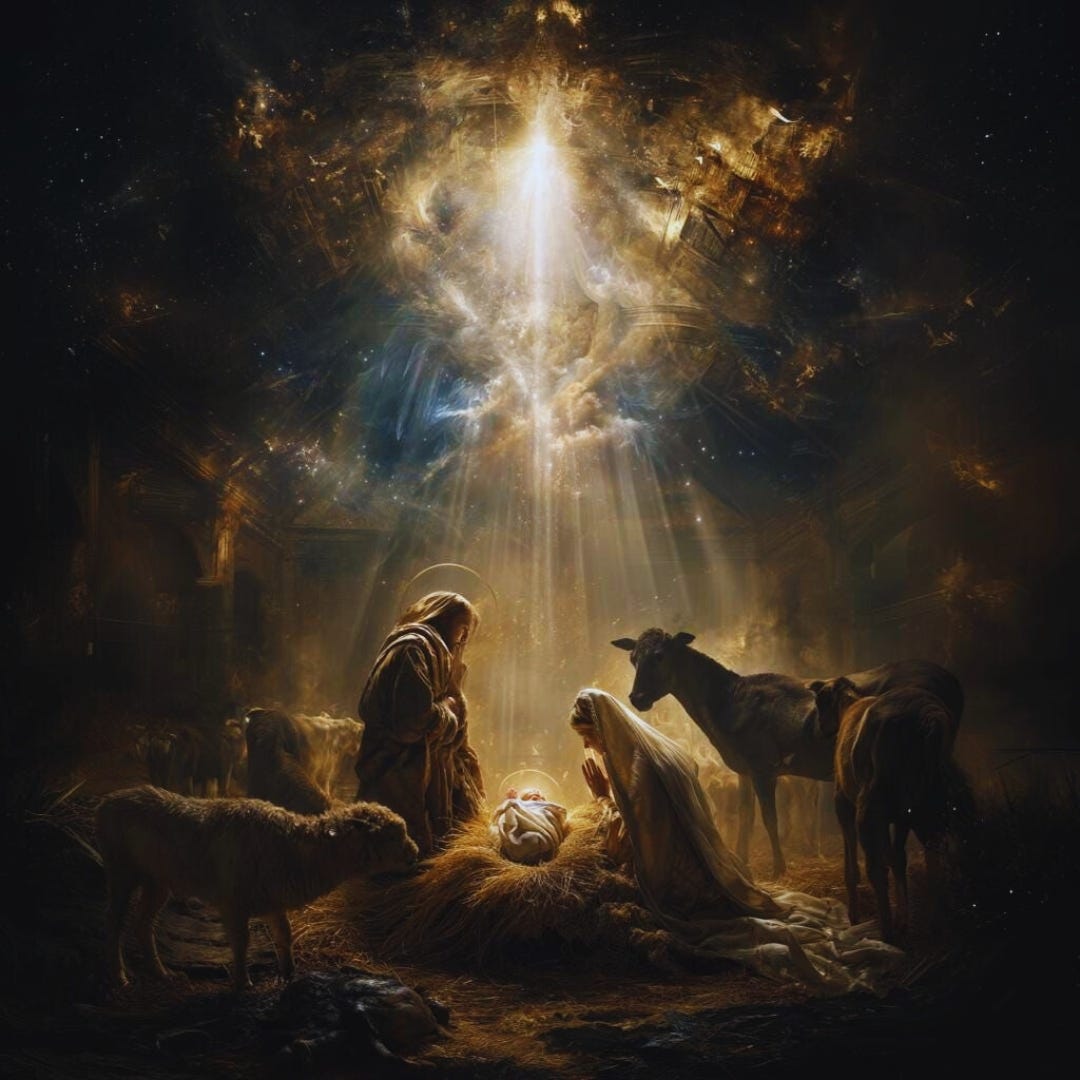
The manger was a box-shaped feeding trough for barn animals. Shaped like an ark. And what rescued Moses? A box afloat on the Nile River.
Moses’s escape from Thutmose III’s order to kill all the Israelite boys in Egypt parallels Noah during the flood. The earth was filled with violence everywhere without end, destroying God’s creation; Egypt was filled with violence, destroying God’s creation.
Like primordial humanity, Pharaoh was attempting to steal rule away from God by force and ruin everything God had made. A microcosm of what preceded the first cosmic judgment.
And Moses escaped by riding the waters of chaos, like Noah.
Though fashioned based on a burial cask found in a Shrine of Anubis, the Ark of the Covenant later made by Israel was both a container for memorabilia from God’s miraculous rescue from Egypt and a reminder of Moses’s and Noah’s escapes from certain death.
Genesis and Exodus became linked. And that link re-emerges in the birth narrative of Jesus.
So too, Herod ordered the killing of the boys 2 and under in Bethlehem to erase a perceived threat to his rule after the wise men didn’t return to tell him where Jesus lived.
Though Jesus was likely 2 years old at the time and living in a house rather than a barn, the manger he lay in when born symbolized his connection to Moses and Noah. The representative of God’s salvation was to beat the odds and overcome.
God had arrived to rescue his people and all of humanity once more from sin and death.
This time, permanently. This time, in the flesh.
Once Upon a Time in Egypt
Joseph, Mary, and Jesus spent a year or so in Egypt. It’s probable that one of his brothers or sisters was born in Egypt. So, by the time they returned to Judea, their family had grown.
Matthew doesn’t focus on what happened in Egypt or on the death of Herod. But we learn from Josephus that Herod suffered a gruesome death from some sort of genital disease, which became infected with gangrene.
The famed Jewish historian tells us:
Disease consumed him. Painful symptoms wracked his entire body in pain. He had only a slight fever. But his skin itched terribly all over. His intestines hurt all the time. His feet and abdomen were swollen. And his genitals were rotting with gangrene which had become infested with maggots.
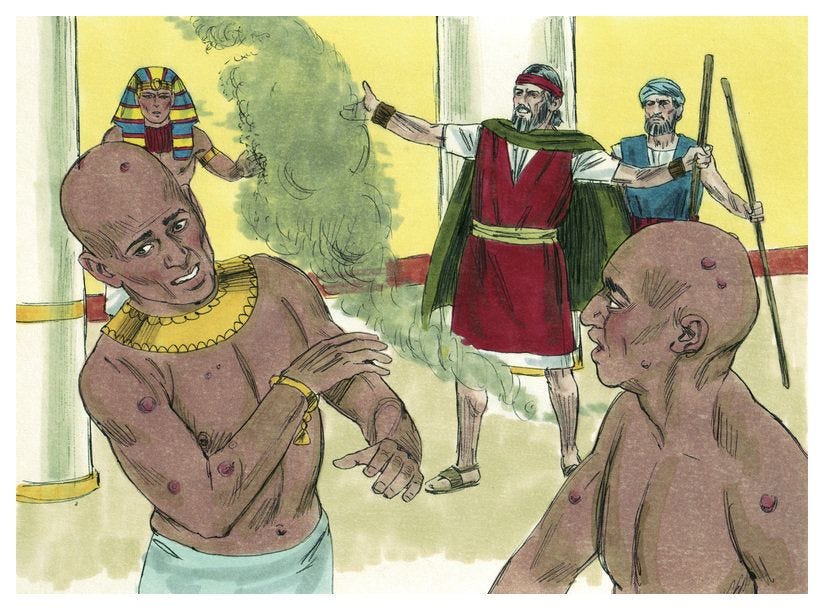
A plague akin to the 10 used to judge Amenhotep when he would not release the people of Israel. Only, this time, the head of the snake alone was the victim.
At one point, the torment was so bad that Herod attempted to take his own life, but was stopped by his cousin Achiabus.
Herod passed away in his palace at Jericho, and his “kingdom” was split between two sons: Herod Antipas in the North (Galilee) and Archelaus in the South (Judea).
The walls came crumbling down. The house was divided. Egypt defeated. And all glory belonged to God alone.
Because the Son of redemption lived on while the son of destruction died.
Enter Now the Promised Land
Archelaus was as bad if not worse than his father. So vile that the Romans eventually abdicated him from rulership over Judea and exiled him to Gaul (France).
However, when God called Joseph to leave Egypt with Mary and Jesus, the demon son of Herod still reigned. So, Joseph was directed to take the coastal northern road to Galilee, where Antipas (a saner, kinder ruler) presided.
But there’s more to the story.
Galilee was also the place where the chief of Ancient Israel’s high places was erected by Jeroboam (the first apostate king of the Northern Kingdom). The city of Dan. There, in Bashan at the foot of Mount Hermon (a central hub for thousands of temples to all the gods of the nations), Israel betrayed God.
Hence, Galilee housed the “gates of hell.” The Devil’s fortress.
Within the region was the humble town of Nazareth, which comes from the Hebrew word nezer (branch). Jesus entered the Promised Land and lived there, becoming a Nazarene.
Therefore, as Isaiah said in Isaiah 11, a branch from the stump of David (Bethlehem) would bear fruit and become the banner of salvation to all the world.
Jesus, the branch of David, ark of the new covenant, God-in-the-flesh, coronated by the wise men from Persia, had arrived at the doorway to darkness. The stage for the biggest cosmic battle for creation was set.
The Tree of Life was to face the father of lies and his fallen angels in the greatest confrontation the world would ever see.
And the new Exodus would resurrect not only the people of God, but the entire universe from certain death. A revival with no end.