



Writing a book is one of the most rewarding acts you can do for yourself and others as a Christian. It shows people you’re the authority, you have a case, you can solve their problems, and you have what it takes.
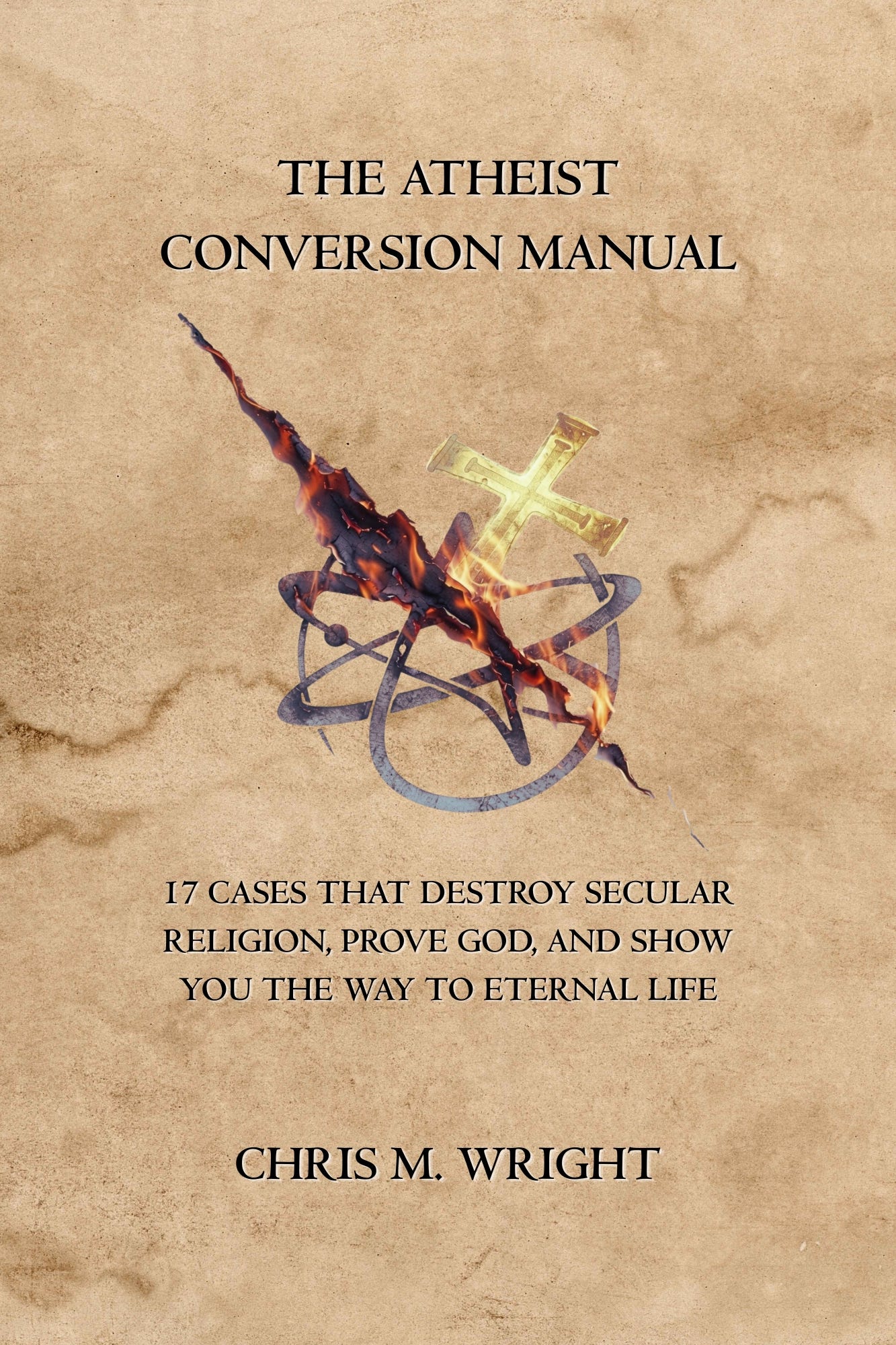
Mine, The Atheist Conversion Manual, just became a #1 New Release in Religious Studies - Philosophy.

Doors’ll open fast. You’re wasting opportunities that will blow your mind.
Instead of writing that book you know needs to be out there, you sit on your sofa munching Cheetos, watching the next episode of House of Dragons.
What if I was to tell you you can write a book super quick and simple on your own? You’re only kidding yourself that you can’t.
Well, that’s exactly what I’m about to do.
I wrote my book, it released in July, and I was astonished at how easy it was to plan it, write it, get it together, get support for it, and click publish.
Here are 7 life-changing lessons I learned from writing my first book that will help you, Christian, write yours (don’t skip a single one):
1. Research like crazy, then mind-dump everything
Sounds cliché, but it works.
Before writing the book, spend several days consuming everything connected to the subject. Read books, watch interviews, revisit old notes, study opposing arguments, and reflect on your own experiences. Then sit down and mind-dump everything you know without worrying about structure or polish.
You’re not out to write the book yet. The mind dump is your time to discover how much material you already have and find the gaps.
I wake up each morning at 4:30 and do this exact process in silence for an hour straight. No phones. No tablets. No tabs. No distractions.
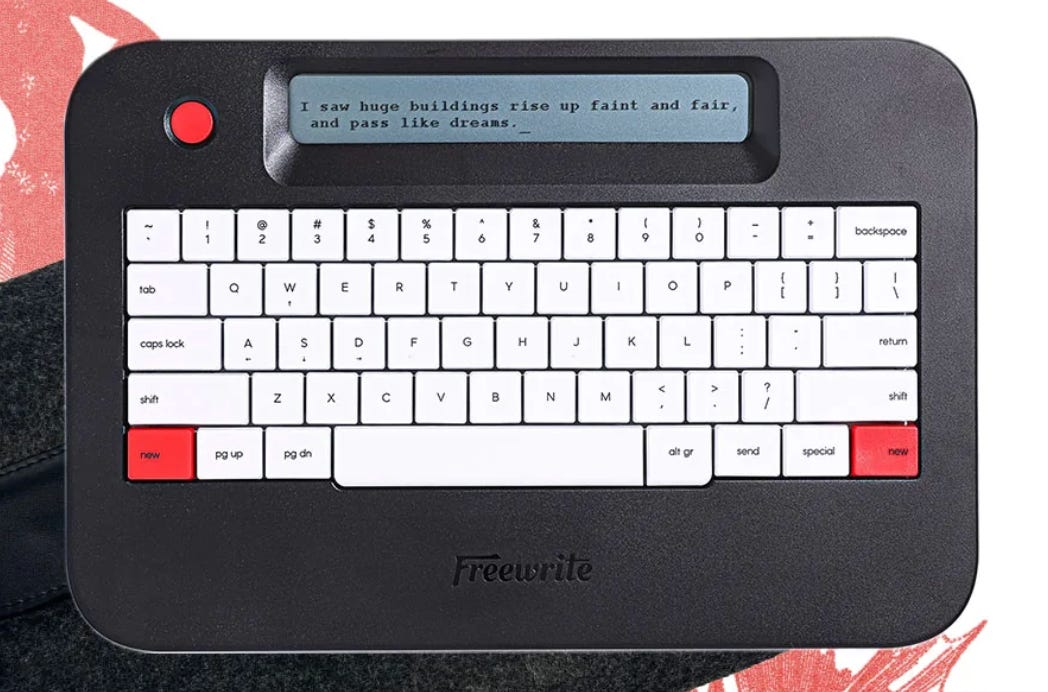
Highly recommend you get yourself an electronic typewriter of some kind, like Astrohaus’s Freewrite (links to your email), something only for writing and nothing else. Or get a voice-to-text app, like Wispr Flow, and talk out your book on your morning walk.
Create one master document and write until you have at least 5,000–10,000 words of raw ideas, stories, arguments, examples, and questions.
2. Decide exactly who the book is for
This step should come before or right after step 1.
A book becomes much easier to write when you can picture one specific person reading it. In my case, I chose my two-year-old son grown up. But it can be anyone of your choosing. Someone personal to you, someone you love and want to help, is best because that’ll raise the stakes.
What problem are they facing?
What do they currently misunderstand?
What should they know, believe, or be able to do when they finish?
You want to teach a priceless lesson(s) that not only helps them, but helps you. If the problem you solve for them is one you’ve wrestled with or are wrestling with, you know it’s a multi-human problem or even universal, so you’ll reach more readers.
Burn this sentence into your memory: This book helps ___ go from ___ to ___.
That’s your guide for every single chapter.
3. Turn your existing material into an outline
“I have to write an outline?”
Yes, you do. No exceptions, unless you repurpose articles you’ve written and they already form a coherent (or close to coherent) outline.
Why?
Because you need to know where you’re going.
Gather old articles, social posts, journals, presentations, notes, emails, podcast appearances, and conversations. Sort them into categories and ask which ideas belong together and relate best to what you intend to write.
I did so with articles, Substack notes, and X posts when creating The Atheist Conversion Manual. Only one chapter was brand new, and even it came from ideas I’d already discussed on X and Substack.
As the late Scott Adams says in his Reframe Your Brain, it’s easier to fix something that already exists than make up something from scratch.
So don’t make the process harder on yourself.
Think of your outline as the spine. Create a simple outline of 10–14 chapters. Under each chapter, add three to five points, stories, or arguments that need to appear. Build from the bones and fill up the rest of the body with muscles, organs, and flesh.
4. Protect 1 hour of power writing every morning
I’ve already mentioned this golden rule above, but it needs extra attention.
Grab a cup of coffee, sit at the keyboard, give yourself 30 minutes-1 hour of uninterrupted writing. No social media, no research rabbit holes, no editing every paragraph as you go, and no bathroom breaks (just kidding, you do those). Mind-dump the chapter while the ideas are fresh.
A professor I had in seminary called this “butt in chair, hands on keyboard” or BIC-HOK. If you’re using a pen, just change it to BIC-HOP. It works the same.
Your goal is to fall into what hypnotists call a trance, but what is really zoning out. Tap into the unstoppable power of your subconscious and conscious minds intertwined. This is what comprises your creative imagination and lets you spew words onto the page.
Afterward, spend five minutes fixing only the most obvious problems. Big edits will come later.
Don’t turn this writing session into a three-hour battle with one sentence.
Write toward a daily word target. At 2,000 words a day for 14 days, you would produce roughly 28,000 words, enough raw material for a short nonfiction book.
5. Finish the ugly first draft
The first draft is going to look like a monster from the pit of hell. Sad, but true.
Nevertheless, it needs to exist. You can’t edit a blank page.
But that’s not your biggest problem with major editing. Editing is where you must move slow, exercise tremendous patience, because you’re gonna whip that demon into an angel from heaven. Your challenge will be to properly utilize time.
A busy life can get in the way, but there are opportunities throughout the day. You may have to forego downtime, and that’s okay. Your phone, TV shows, and video games can wait.
Set a deadline, and do everything you can to keep it. But don’t beat yourself up if you don’t meet it.
I had several fake deadlines I missed with The Atheist Conversion Manual, and instead of freezing up, I saw the missed deadlines as mile markers for the marathon. Sprint and you could get a face full of pebbles and dirt.
Quality comes first. Never sacrifice the quality of the book to say you finished on time. Run the race marked out for you.
Establish three deadlines: outline, first draft, and final manuscript. Track progress by chapters and words rather than by whether you “felt productive.”
6. Recruit honest readers and revise
Raw and honest feedback is like sweet honey. True friends will say what you need, not what you want.
Which chapter felt weakest?
Where did you become confused?
What argument was unconvincing?
Where did the book become repetitive?
What did you still want to know afterward?
If all you’re getting is “great job, bro,” you’re in the wrong crowd and will get nowhere. You need someone in your corner who’s there to challenge you hard.
Give the manuscript to 3-5 trustworthy friends (maybe even an enemy or two). Collect their feedback, look for repeated criticisms, implement the good advice that works for your book, and complete one serious revision.
7. Package, publish, and profit
Your final product has to look nice and appeal to potential readers. Images, title, and subtitle put in more work than you realize.
For the image(s), you want to create something memorable that relates to your topic and sears into the brain of anyone who sees it. In my case, I did a gold cross burning up the atheist symbol. No one comes across that image and wonders, “What’s this about?”
I’ve found it best to follow best-selling ghostwriter Joshua Lisec’s advice for titles. In a thread he did a while back on X, he said the title is supposed to create curiosity and make potential customers do these 6 things:
Stop scrolling search results
Click your book title
Say to themselves “wow, this looks kind of cool”
Read the book description
Read the free sample
Buy the book
He recommends you start with the subtitle because it’s what describes the specific promises you will deliver to your readers. There are three promises your readers must understand with clarity: (1) generic functional promise (what they’ll get in general), (2) specific functional promise (what they’ll get specifically), and (3) specific emotional promise (how good they’ll feel with what they get).
My subtitle is “17 Cases that Destroy Secular Religion (general functional promise), Prove God (specific functional promise), and Show You the Way to Eternal Life (specific emotional, or spiritual, promise).”
Kinda sounds like a manual, right?
Well, that’s where “The Atheist Conversion Manual” as the title comes from. The promises in the subtitle. It leaves no doubt what the book is about and promises to solve a contentious public battle in modern society (creating curiosity).
Last, but most certainly not least, you need to gather a launch team and formal praise for your book.
Trusted friends who did your reviews (see lesson 6) are best for formal praise. I put around 8 in the front of The Atheist Conversion Manual to serve as social proof. Big names make big social proof, so if you’ve got friends who are dominating the internet, invite them onboard, give them a complete PDF copy of your book, start a group chat, provide the launch date, and have them storm Amazon with reviews the first two weeks after launch day.
Make a promise that creates curiosity, infuse it into your title, get praise from trusted friends, and then get a group together of at least 30 early readers in a chat to leave reviews and boost your book in the Amazon algorithm. The first 2 weeks are critical to make your book rise in the New Bestsellers list.
BONUS: Have fun
In all you do, look for ways to make it fun. If writing isn’t fun, you’re doing it wrong.
Sorry, but it’s true.
When you write, you’re on an adventure, and adventures can be scary. But that’s what turns them into fun journeys.
You never know what you’ll encounter. If you’re focused on the danger and the risks instead of the untold bounties of knowledge and solutions out there to be staked, you’ll stay a debilitated empty husk forever.
Lewis-and-Clarke it. Frodo-and-Sam it.
I hate to break it to you, but eventually...all those dangers and risks will devour your little Shire...if you do nothing.
God exists, you can know him, and he made you to accomplish extraordinary feats...
The Kindle edition of my new book The Atheist Conversion Manual is on sale for Labor Day Weekend until 9/8/2026, and I wrote it for you.
In it, I explain the first two in the list: (1) why God is real and (2) who he is. I present the case that brought me to belief in Christ, wrapped in my story, presented in clear language, to take you on a journey through convincing evidence for the existence of God Most High and why he matters for you.
The case it contains convinced me and has convinced others. Here’s what early readers are saying:
“The Atheist Conversion Manual is a no-nonsense approach to defending truth. It presents a compelling case for Christianity using the classical apologetics method in a way that is practical, engaging, and easy to understand.”
“When I need material for the purpose of solving or addressing any kind of problem, I value and respect most an author who has had to actually do it. This book and its author, fit that exactly.”
“Chris writes apologetics the way it should be written: plain language, real stakes, and a testimony that earns the argument.”
Many apologetics books these days read like academic monologues with boring, dense, confusing verbiage. You’d rather slam your head against the wall than turn another page.
My manual fixes that problem without corrupting the case for Christ. It will change your life.
Get your copy here:
I really appreciate the thought and detail you put into this guide. I've been kicking around a book idea all year and need to buckle down and get it done this winter!
1 hour of focused writing time, those are rookie numbers, lol!
When I was writing Elandrial’s story, I’d start in 8 in the morning and, except for lunch and dinner, at 8 in the evening, I’d finally stop writing.
By day 3, she was the one writing, so I can say my book is the one in 200 books that were written by helpful Elves!
After 9 days, it was done, best time of my life so far!