


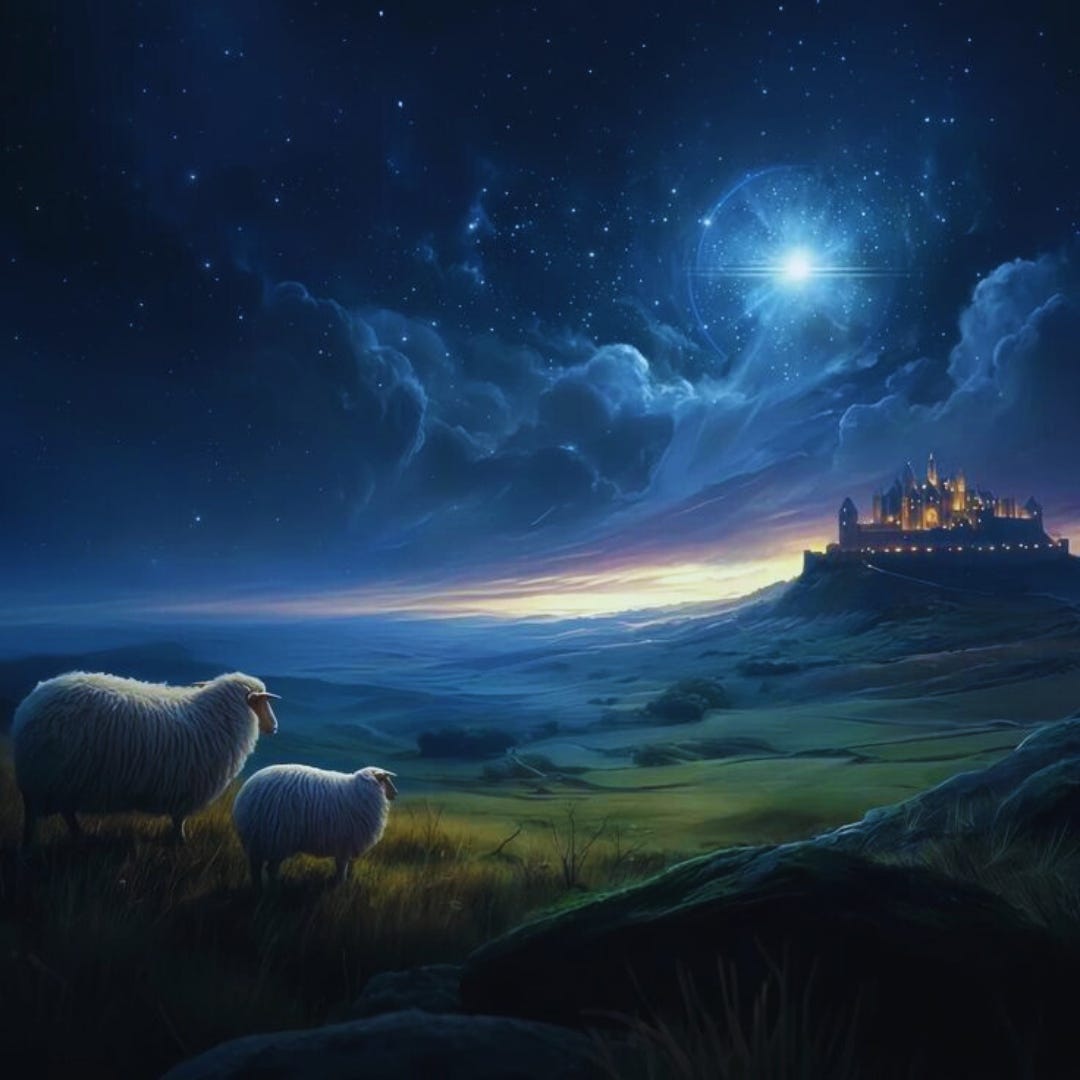
Everyone knows Jesus was born in Bethlehem because it was the city of King David. His birthplace and home until he reigned from Jerusalem.
And that’s the extent of its significance, right?
Wrong.
Something else happened. Something much more impactful to the story of the coming Messiah. And to you and me.
Bethlehem was destined for glory 2000 years before Jesus and 1000 years before David in two of the most iconic moments of the Bible:
(1) Melchizedek, and (2) the near-sacrifice of Isaac
Promises made to Abraham and events in those two stories affect the trajectory of the birth, life, death, and resurrection of Christ in ways few appreciate or understand.
Lessons From Geography
Before we get into detail, it helps to get a lay of the land.
Bethlehem means “House of Bread” or “House of Food.” Made from the two Hebrew words beit (house) and lekhem (food).
Though debated, some in scholarship think it was originally named after the Babylonian goddess Lahmu, who gave birth to the earth and sky. She represented not only creation, but also fertility, the giving and preservation of life.
The latter theory can’t be discounted since the Canaanites interacted with the Babylonians and worshipped some of their deities. And used the “beit” formula in their own languages to name places “house of [insert god].” Bethel, for instance, means “house of El.”
It’s possible a cult of Lahmu resided in ancient Bethlehem, and it was later renamed by the Israelites to “House of Bread” to remove a goddess from the land. And for another reason we’ll get to in a moment.
What’s super important is location, location, location.
Bethlehem is 6 miles south of Jerusalem. There are two reasons this location matters: (1) Jerusalem is the site of Mount Moriah (on which Solomon built the Temple) and (2) Bethlehem is near the Dead Sea.
Both are integral to the stories of Abraham against the kings of Canaan, Isaac on the altar, and Jesus in the feeding trough.
Before you go on…
Consider upgrading to a paid subscription.
Support our work and get theses awesome benefits:
Exclusive lessons every Tuesday explaining why you can believe in God with conviction and/or how to live for him with courage, OR deeper dives into Scripture, theology, or apologetics.
An exclusive subscriber chat to get real-time feedback from Courageous Chris and other like-minded Christians about doubts, evidence for God, and much more.
A lifetime 30% discount to our growing Gumroad store with how-to guides and courses on how to argue and live your Christian faith in a secular world.
The humble feeling of knowing you are supporting a growing ministry with a mission to spread the good news of Christ to a dying generation.
Moriah and the Conflict of Kings
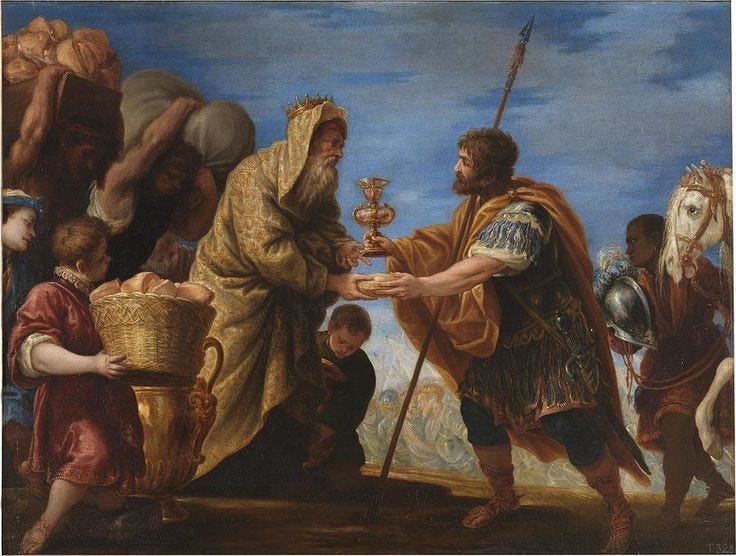
In Genesis 14, Abraham has settled in the land of Canaan and split from his nephew, Lot. Lot chose to live in Sodom and Gomorrah and gets caught up in a feud they have with other kings in the land. Their enemies take Lot captive.
So, Abraham, living near Mamre, enlists the members of his tribe and allies (318 men in total) to combat the kings who came against Sodom and Gomorrah and their allies. The battle takes place in the valley of Siddim (Dead Sea).
God goes with Abraham and his forces, and they successfully destroy the enemy kings and rescue Lot. Then happens an event with a figure who has been puzzled over for millennia.
Abraham meets with Melchizedek, king of Salem (later Jerusalem) and priest of God Most High, and the king of Sodom in the valley of the kings, between Salem and what would become the Mount of Olives.
Some think Melchizedek is a theophany, an appearing of Christ Jesus in the Old Testament. Maybe so. But I don’t think so.
It seems Melchizedek is a human in the land of Canaan who maintained faith in God Most High after the Flood and Babel. There were very few left by the time of Abraham, but believers in God Most High didn’t disappear entirely.
Abraham and Melchizedek break bread together and drink wine. And the priest blesses both Abraham and God for the victory, which is reciprocated by Abraham giving him a 10th of everything he owned.
Melchizedek is most remembered for his presence in the Book of Hebrews, because the writer there establishes Jesus’s priesthood as after the line of Melchizedek. So do Matthew and Luke, which we’ll get to below.
What’s imperative for now is the significance of the meeting. Abraham is brought together with someone loyal to God Most High, and they share what amounts to a rite of promise, akin to the Eucharist. And then Melchizedek says this:
“Blessed be Abram by God Most High,
Possessor of heaven and earth;
and blessed be God Most High,
who has delivered your enemies into your hand!”
It’s no coincidence that in chapter 15, after this moment, God re-establishes his covenant with Abraham in detail. God tells Abraham He is his “great reward,” his descendants will outnumber the stars (the divine sons of God or angels), and he will come to possess forever the land of Canaan (Israel).
Those promises are set in stone through a ritual sacrifice, the spilling of blood. A goat, ram, dove, and pigeon. Bringing to life the Eucharistic rite shared by Melchizedek and Abraham.
Circumcision then becomes the symbol of the covenant promises, ritual, and communal rite (flesh and blood) in chapter 17. That covenant is universal (hence Melchizedek), but to be brought to fruition through the lineage of Abraham.
From all the above, we learn several important lessons:
Abraham remains God’s elected representative (lower-case messiah)
God owns heaven and earth and has full authority over them
No enemy against God can withstand his might
Even strangers recognize God’s sovereignty
God’s eternal promises are sealed in blood
Moriah (Jerusalem) is sacred ground
Which leads us to the near-sacrifice of Isaac.
Boy, That Was Close
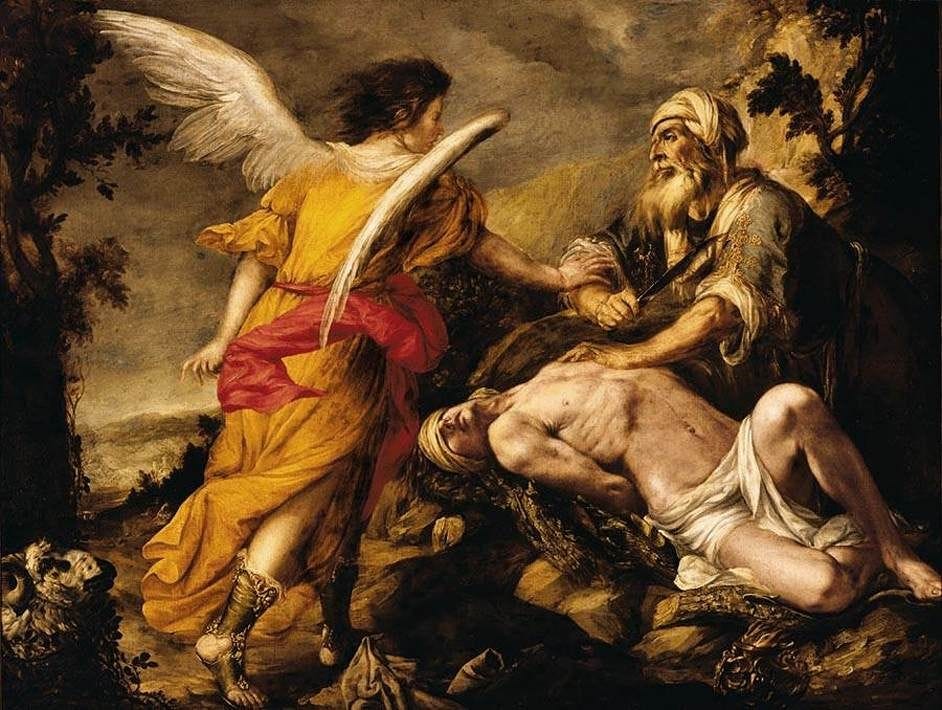
Juan de Valdes Leal, “Sacrifice of Isaac,” 1657-59
Isaac is the son God promises to Abraham and Sarah to fulfill the covenant vows to humanity. He is circumcised on the eighth day, in recognition of Abraham’s covenant with God. And he grows in conflict with his brother, Ishmael, a pattern that will continue between his own sons, Jacob (Israel) and Esau.
No first son in the history of Israel is ever chosen. Why? Because the only Son of God is to become our living sacrifice. An implied promise tied to the covenant, brought to life in chapter 22.
God commands Abraham to take Isaac into the region of Moriah, where he met Melchizedek, and kill his son as an offering. A test of faith. Is Abraham willing to give up everything to remain loyal to God Most High?
The trip takes three days (sound familiar?) from Beersheba, where Abraham was camped after making a pact with Abimelek and dedicating the location to God by planting a tamarisk tree. Deep in the heart of southern Canaan, just west of the Dead Sea.
Abraham, teenage Isaac, and two of his servants reach a point where they can see Moriah in the distance. Hovering over the horizon. And Abraham orders the servants to stay put in that spot while he takes Isaac on ahead to build an altar to God.
Isaac notices there is no sacrifice, just wood and starter for fire, and asks about the missing lamb. He gets suspicious. Abraham’s answer is everything, “God himself will provide the lamb for the burnt offering, my son.”
Astoundingly, when Isaac finds out he is to be the sacrifice, he gets on the altar. Embraces the end. He trusts his father as Abraham trusts God (Jesus: “You believe in him who sent me, believe also in me”). The son of promise willingly lays down his life.
And God intervenes for the sake of Isaac and Abraham, for the sake of mankind. He stops Abraham mid-swing of the knife and points him to a ram with its horns stuck in a thicket. They slaughtered the ram and declared Mount Moriah (Jerusalem) the mount of God’s provision.
God himself will provide the ultimate sacrifice for the covenant, one beyond what even his most faithful servant could provide. He dictated the terms and will dictate also its fulfillment in blood.
A New Son Shall Rise
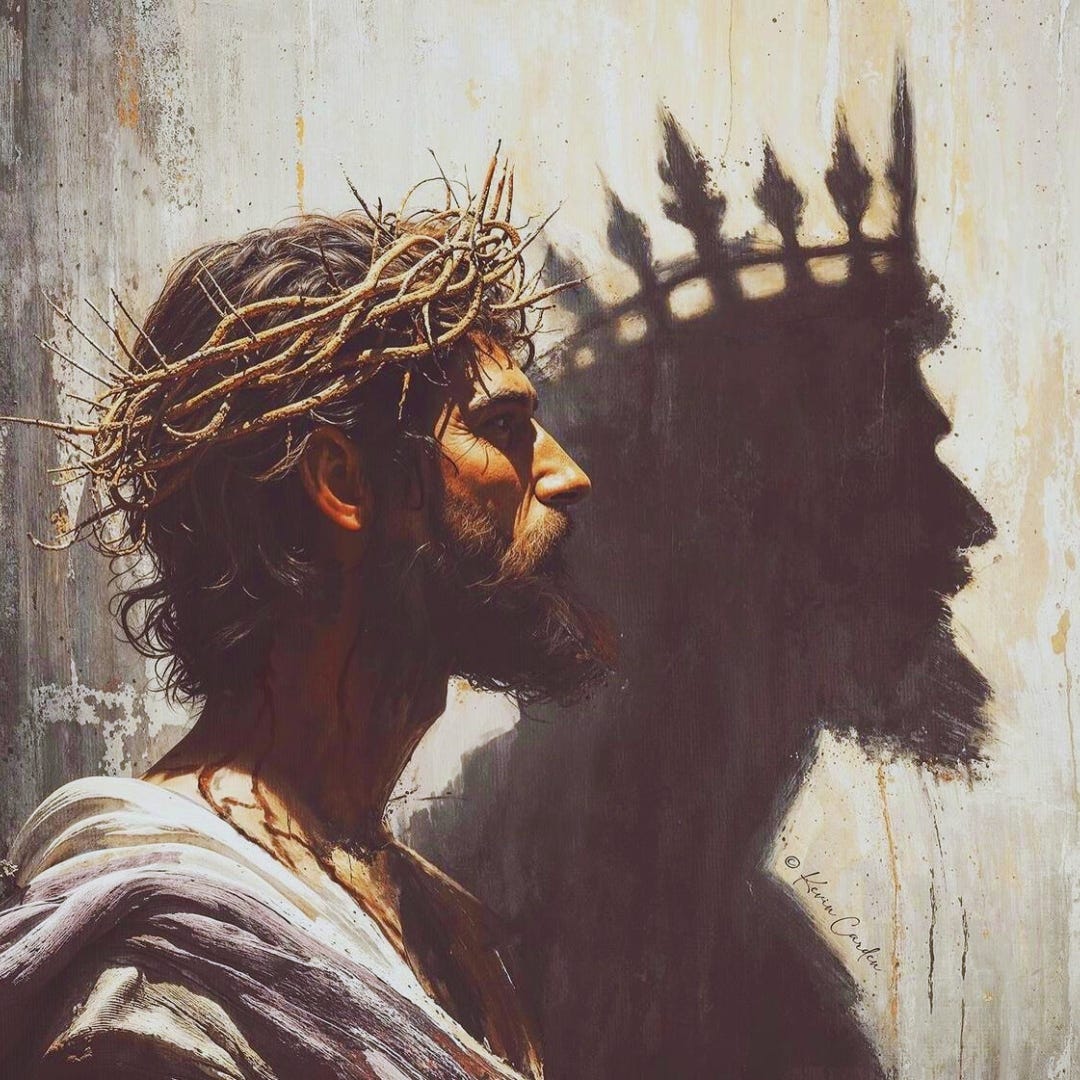
Could Bethlehem be where Abraham broke bread with Melchizedek and later left his two servants to watch from afar? The possibility isn’t far-fetched (pun intended).
After all, Bethlehem is six miles south of the Temple Mount of Jerusalem, in perfect viewing distance of Moriah. It sits at the base of the mountain, so that one must hike or rise up over the rugged hills.
If so, the birth of Christ there goes way beyond a connection to King David. It sets the stage for God to bring about the realization of his promises to humanity since the beginning:
Jesus is the Great High Priest after Melchizedek
He will go to war against the gods of this world
He is the sacrificial lamb God will provide
His blood will be spilled for the covenant
He will lay down his life willingly for us
His enemies will be crushed
He will rise to the throne
He is the bread of life
All of this before even stepping one inch into Jesus’s ministry, death, and resurrection.
Bethlehem was never just the city of the king. God designated it as the “House of Bread,” where broken humanity, heaven and earth, would be made whole again, from the start. Spitting in the face of the gods and the kings of this world. Assuring them of their demise. And promising an everlasting inheritance for his children.
That is our heritage as Christians. That is our Christmas joy.
Merry Christmas C. !