


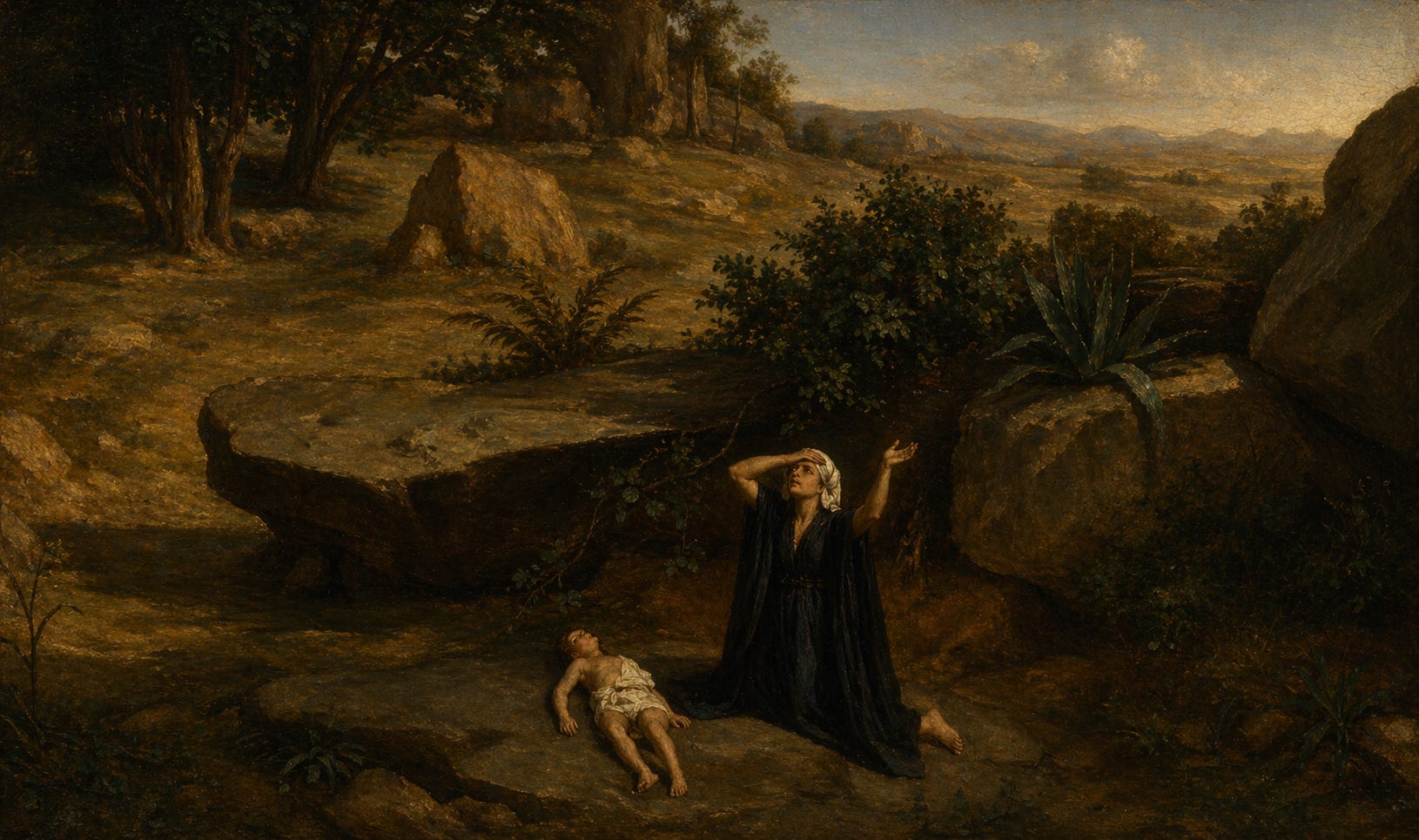
Is God the villain?
Ask many people in our world, and they’ll blast a resounding, “YES!!!” But their absolute hatred for him comes from misreading and mistreatment of the Bible.
The stories of Hagar and Ishmael at the wells are a case in point. In Genesis 16 and 21, modern readers find what they think is a ready-made smoking gun of divine evil: Abraham, the patriarch, and God and the “oppressive” system they represent.
Hagar and Ishmael are helpless victims, atheists and feminists say, crushed beneath the weight of male power and ancient patriarchy. The victimhood feels familiar, almost comforting in its simplicity.
But the full context of Scripture tears their script apart.
Sarah, mother of the son of promise and the very heart of the covenant line, is the one who introduces Hagar as a surrogate, then turns on her with ruthless contempt once she conceives. Demands the expulsion of mother and child. Even as Abraham himself resist.
Raw human jealousy and possessive fear unleashed, the Fall again on an intimate and devastating scale.
And the abuse which starts the saga doesn’t reign supreme. A runaway Egyptian servant, scorned and cast out, suddenly stands at the center of divine attention. Names God. Receives blessing.
Sovereign God works breathtaking mercy through the very failures and fractures caused by those closest to his promise.
Blesses
Arranges
Prepares
Delivers
The Living One…through living waters.
What begins in cruelty and exile becomes the path to cosmic restoration.
This is a preview of our weekly paid article for Allegiant Faith VIPs. Become a paid subscriber and get access to the full article and more:
Courageous Chris’s “30-Day Evangelist: How to Share, Defend, and Live Your Christian Faith in a Secular World” and all future published works.
2 posts every week, on Wednesday and Saturday (give or take)
A bi-weekly live apologetics book study
Access to our full archive of articles
An exclusive subscriber chat
Your support means the world to us and helps us continue to grow online.
Click below and upgrade!
Servants and Masters
Throughout both chapters, the Hebrew term for Hagar is shifchah (“maidservant” or “handmaid”), not the word typically associated with chattel slavery in modern imaginations. In the ancient Near East, shifchah often described female household servants or indentured workers who provided domestic or agricultural labor in exchange for support.
Biblical usage across Genesis and beyond shows it as a relational term of service under a household head. Distinct from the harsher connotations of perpetual ownership.
Abraham saw Hagar as family.
Second Temple sources, including traditions reflected in Josephus and later Rabbinic writings, suggest Hagar entered Abraham’s household as part of the wealth Pharaoh bestowed on him after the events of Genesis 12 (when Abraham, in fear, passed Sarah off as his sister). Some Midrashic expansions even portray Hagar as a gift or high-status Egyptian attendant, though the biblical text itself leaves her former life a mystery.
Feminist readers have long highlighted the stories of Hagar and Ishmael at the wells (Genesis 16 and 21) as stark examples of patriarchal abuse. But is that what we really see?
