


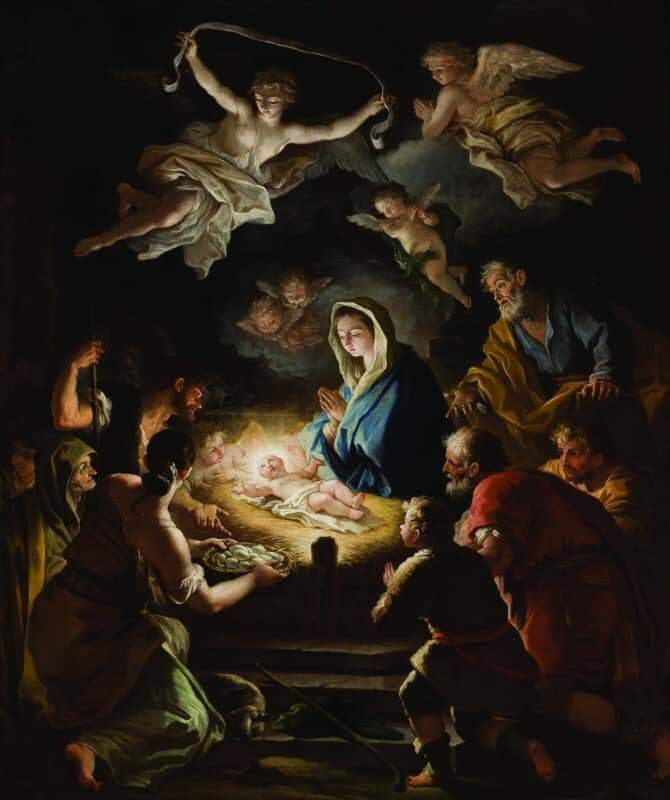
The birth story of Jesus has almost become cliché. People repeat it every year, retell it in countless forms, and reimagine it with endless creativity.
Said creativity is often beautiful and worth celebrating. But it can cause us to forget the eternal significance of the Son of God reducing himself and entering our world.
There are only two original birth narratives. Matthew and Luke.
There are four Gospels, yet only two include accounts of Jesus’s birth. That should make us pause. Why only two? Why do Mark and John remain silent about the nativity?
The simplest answer is Mark and John were less concerned with how Jesus arrived and more concerned with what he said and did.
That doesn’t mean Matthew and Luke ignored Jesus’s teaching or ministry. Matthew includes five major teaching sections placed alongside powerful miracles. Luke records many miracles as well and preserves some of Jesus’s most famous parables.
Still, each writer had a different emphases.
Matthew focuses heavily on discipleship. Luke writes like a careful historian. Those different aims tell why the birth stories are included and shape how each is told. And the differences matter.
At first glance, their accounts can feel disjointed or even contradictory. In reality, they are doing something far more interesting.
They illuminate one another.
Together, they give us a fuller picture of how the Messiah entered the world. To see that clearly, we need to look at each story on its own before exploring their astounding connections.
Matthew: God Made King
Matthew’s account is brief and tight. It reads almost like a summary, yet every detail carries weight. Matthew’s goal is clear from the start: He wants to show you Jesus is the promised Messiah.
And he anchors that claim in the Hebrew Scriptures.
The story opens with Mary, who is pregnant by the power of the Holy Spirit. Joseph doesn’t yet know this. Believing she has been unfaithful, he plans to divorce her quietly.
A dream interrupts that plan. God reveals to Joseph that the Holy Spirit conceived the child, and the child will be the Savior. Matthew connects this directly to Isaiah 7:14, the promise that a virgin would give birth and the child would be called Immanuel.
Then Matthew moves quickly forward. He gives almost no details about the birth itself, only stating that Jesus was born in Bethlehem.
Instead, the focus shifts to visitors from the East. Matthew never tells us how many Magi there were. The tradition of three comes later, drawn from the three gifts, not from the text. These men were likely astrologers from Persia, a great caravan following a star they believed announced the birth of a king.
Their search leads them to Herod, the Roman-backed king of Judea. Herod consults the chief priests, who quote Micah 5:2 and identify Bethlehem as the Messiah’s birthplace. Herod pretends he wants to worship the child, but his real aim is murder.
The Magi eventually find Jesus, now living in a house, and worship him. They present their gifts and are then warned in a dream not to return to Herod.
Dreams matter in Matthew’s story. They echo the Old Testament, where God often spoke this way. Recall Joseph, son of Jacob, and his many dreams. God made good come from evil. The Magi return home by another route.
Another dream follows, this time given to Joseph. He is warned Herod will try to kill the child, and he is told to flee to Egypt. Joseph obeys. Matthew ties this movement to Hosea 11:1, and declares Jesus as God’s Son called out of Egypt.
Herod responds with violence, ordering the death of every boy two years old and under in the region. Matthew connects the horrible genocide to Jeremiah 31:15, Rachel weeping for her children.
After Herod dies, Joseph receives yet another dream telling him to return to Israel. Fearing Herod’s son Archelaus, he settles instead in Galilee, in a town called Nazareth. This becomes part of Jesus’s identity. People will know him as the Nazarene.
Matthew’s story is tense, political, and dangerous. A king is born, and the powers of the world react.
Before you go on…
Consider upgrading to a paid subscription.
Support our work and get theses awesome benefits:
Exclusive lessons every Tuesday explaining why you can believe in God with conviction and/or how to live for him with courage, OR deeper dives into Scripture, theology, or apologetics.
An exclusive subscriber chat to get real-time feedback from Courageous Chris and other like-minded Christians about doubts, evidence for God, and much more.
A lifetime 30% discount to our growing Gumroad store with how-to guides and courses on how to argue and live your Christian faith in a secular world.
The humble feeling of knowing you are supporting a growing ministry with a mission to spread the good news of Christ to a dying generation.
Luke: Heaven Touches Earth
Luke’s account is longer and more detailed. He doesn’t begin with Jesus at all, but with the birth of John the Baptist. Luke wants us to see the larger movement of God at work.
Zechariah and Elizabeth are elderly and childless. Like Abraham and Sarah before them, they receive a promise that seems impossible. The angel Gabriel tells Zechariah they will have a son named John. When Zechariah doubts, God strikes him mute until the child is born.
John’s role mirrors Isaac’s in an important way. Isaac marked the beginning of Israel as a people. John prepares Israel for the Lord’s arrival through repentance and baptism. While John is not the son of promise, one to come (the ram caught in the thicket) is on the horizon.
Mary enters the story in Luke 1:26. Gabriel appears again, this time to a young virgin pledged to marry Joseph, a descendant of David. She is told she will conceive by the Holy Spirit and give birth to a son named Jesus. He will be called the Son of the Most High and reign forever on David’s throne.
Mary’s response is remarkable. In what must have been the most overwhelming moment of her life, she calls herself the Lord’s servant and submits to God’s will with no record of hesitation.
When Mary visits Elizabeth, the unborn John becomes the first human to react to Jesus’s earthly presence. He leaps in the womb, and Elizabeth, filled with joy, calls Mary blessed among all women. Even before birth, the story points toward recognition and witness.
Later, a decree from Caesar Augustus forces Joseph to travel from Nazareth to Bethlehem for a census. Mary goes with him. There, Jesus is born. They wrapped him in cloths and put him in a manger since there was no space in the inn.
Luke alone tells us about the shepherds. While tending their flocks, an angel who announces the birth of a Savior visits them. Suddenly, a multitude of heavenly hosts appears, praising God. The shepherds go to Bethlehem and find the child just as they were told. Overwhelmed with joy, they spread the news, becoming the first public witnesses to Jesus’s arrival.
After eight days, the child is named Jesus. Later, Mary and Joseph bring him to the Temple to consecrate him to the Lord, following the law in Exodus 13. There they meet Simeon and Anna, both waiting for God’s promised Messiah. They recognize Jesus and speak prophetically about his future, a mix of salvation and chaos.
The family then returns to Nazareth. Luke closes the story by telling us that Jesus grew in wisdom, strength, and grace.
Luke’s account is filled with wonder, worship, and quiet faith. Heaven draws near, and ordinary people are invited into the story.
When Man and God Collide…
The reason both birth narratives are preserved is simple: Together, they give us a complete picture.
Matthew tells us that Jesus’s birth threatened Herod’s rule. Luke explains why Jesus was in Bethlehem in the first place. The census forced Joseph to return to the city of David, fulfilling prophecy.
Luke also helps us understand Joseph’s later decision to return to Nazareth after fleeing Egypt. Nazareth was home. He knew the area and likely had support there, making it a safer place to raise the child away from Herod’s reach.
The Magi didn’t arrive on the night of Jesus’s birth. Matthew places them later, when Jesus is already living in a house and possibly around two years old. This separates them from the shepherds, despite popular tradition.
Luke’s account of the Temple dedication appears to happen after the political danger has passed. The calm tone, the public setting, and the lack of fear suggest Herod and Archelaus are no longer immediate threats. It also tells us Jesus was old enough to participate in the rites, which makes him several years beyond infancy.
Matthew emphasizes individual angels appearing in dreams. Luke reveals a larger heavenly presence, led by Gabriel. Gabriel appears prominently at the beginning, then fades as Jesus becomes central. In each case, the focus gradually shifts where it belongs: Toward the Son of God.
Every character, angelic or human, moves around Jesus. The story bends to him. That pattern will continue through his ministry, death, and resurrection.
Why Two Stories Are Better Than One
The Gospel accounts don’t compete with each other. They cooperate. And their differences don’t weaken their credibility. They strengthen it.
Different perspectives affirm shared truths while filling in what others leave out. Together, they give us historical grounding and narrative depth. Herod, Archelaus, Caesar Augustus, Persian Magi, and the shepherds in the fields aren’t mythical figures. They belong to real places in real history.
The birth of Jesus isn’t a polished legend. It’s a layered account told from multiple angles.
God’s incarnation is tangible, the convergence of heaven and earth. When the stories align without collapsing into sameness, when they affirm rather than contradict, we are left with something solid.
And you are pulled into the truth of God’s incredible works.
Thanks for sharing Chris